
6 min read
When planning for EV charging stations, property managers and business owners must consider various factors, including the type of charging technology, electrical panel capacity, load calculations, and permitting requirements. Making informed decisions in these areas can lead to efficient installations that support your operations and meet tenant needs.
As electric vehicles gain popularity, the demand for charging stations is increasing. Property managers and business owners need to understand the differences between Level 2 and DC fast charging options, how to assess electrical capacity, and the role of electrical contractors in the installation process. This guide will break down these key considerations to help you navigate the planning process effectively.
Understanding Level 2 vs. DC Fast Charging
Level 2 charging stations are ideal for locations where vehicles will be parked for several hours, such as office buildings and shopping centers. In contrast, DC fast charging stations are designed for quick charging, typically found along highways or in areas where users need to recharge rapidly.
- Level 2 Charging: Provides 10-20 miles of range per hour of charging, suitable for overnight or long-term parking.
- DC Fast Charging: Can charge a vehicle to 80% in 30 minutes, perfect for high-traffic areas where quick turnaround is essential.
- Considerations: Evaluate your location’s traffic patterns and user needs to determine the best charging solution.
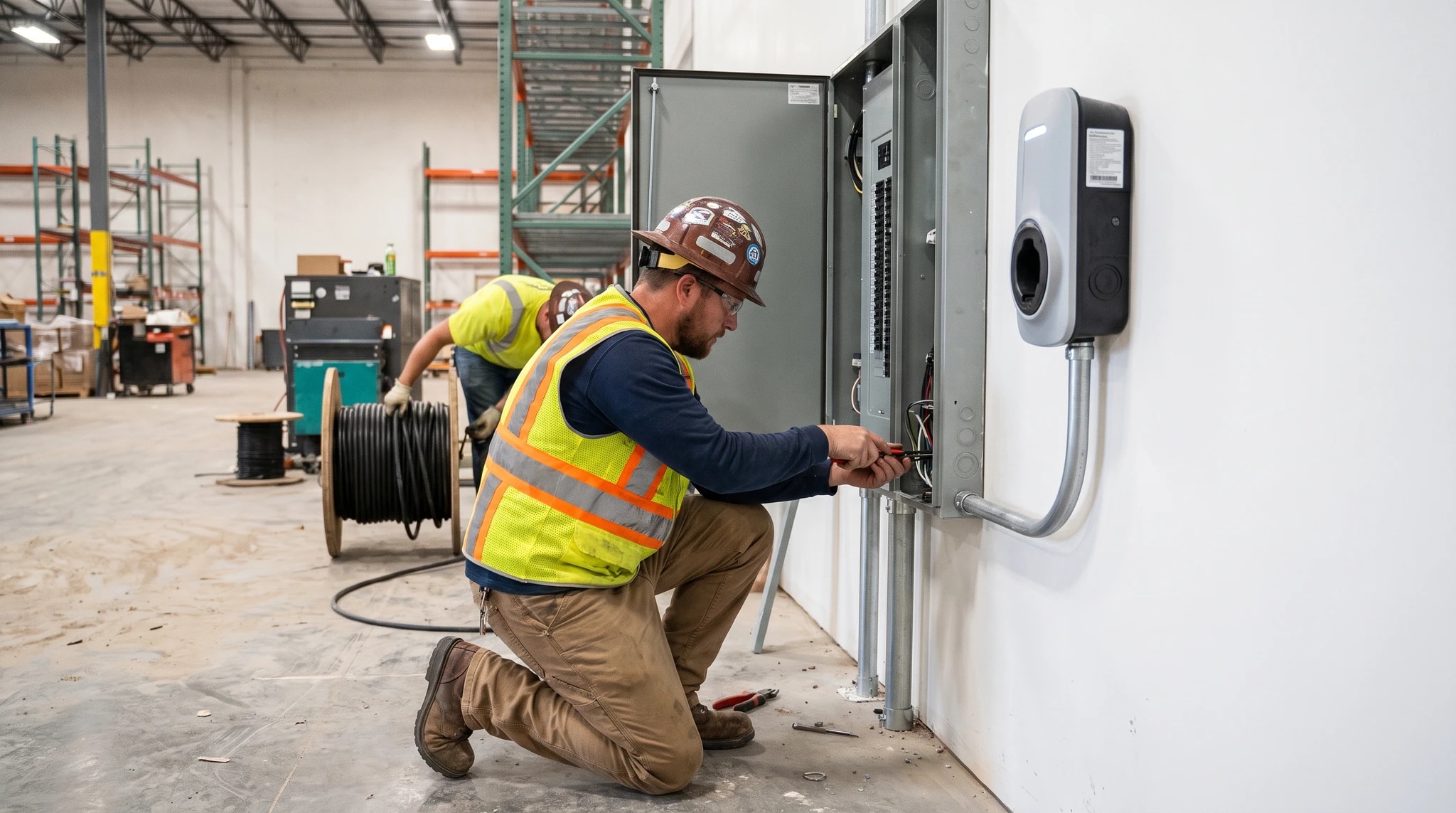
KSI handles commercial EV charging installations from load study to final inspection, and can pair them with electrical panel upgrades when capacity runs short.
Assessing Electrical Panel Capacity
Before installing EV charging stations, it’s crucial to assess the existing electrical panel capacity. This assessment ensures that your electrical system can handle the additional load from the charging stations without compromising safety or performance.
- Conduct a load calculation to determine current usage and available capacity.
- Consider future growth and the potential addition of more charging stations.
- Consult with a licensed electrician to evaluate your panel and recommend necessary upgrades.
Load Calculations for EV Charging Stations
Load calculations are essential for understanding how much power your EV charging stations will draw. This process helps prevent overloads and ensures compliance with electrical codes.
Key factors to consider in load calculations include:
- The number of charging stations planned for installation.
- The power rating of each charging station (typically 3.3 kW for Level 2 and 50 kW or more for DC fast charging).
- Existing electrical loads in the building.
By accurately calculating these loads, you can avoid costly electrical upgrades and ensure reliable service for your tenants.
The U.S. Department of Energy keeps a practical overview of charging infrastructure development, and installations follow the National Electrical Code (NFPA 70).
Navigating Permitting Requirements
Permitting is a critical step in the installation of EV charging stations. Each municipality has specific regulations and requirements that must be met before installation can begin.
To navigate the permitting process effectively:
- Check local zoning laws to confirm that EV charging stations are permitted in your area.
- Gather necessary documentation, including electrical plans and load calculations.
- Submit your application and be prepared for inspections during and after installation.
The Role of Electrical Contractors in EV Charging Installations
Hiring a licensed electrical contractor is essential for the successful installation of EV charging stations. They bring expertise in navigating electrical codes, ensuring safety, and managing the installation process.
Here are some key responsibilities of electrical contractors:
- Assessing site conditions and determining the best installation approach.
- Performing load calculations and panel upgrades as needed.
- Coordinating with local authorities for permitting and inspections.
- Ensuring compliance with safety regulations and industry standards.
Maintaining EV Charging Stations
Once your EV charging stations are installed, ongoing maintenance is crucial to ensure their reliability and performance. Regular inspections can help identify potential issues before they become significant problems.
Consider these maintenance practices:
- Schedule routine inspections to check for wear and tear.
- Monitor usage patterns to anticipate future needs.
- Keep the charging area clean and accessible for users.
Future-Proofing Your EV Charging Infrastructure
As electric vehicle technology continues to evolve, future-proofing your EV charging infrastructure is essential. This approach ensures that your installation can adapt to advancements in charging technology and increasing demand.
To future-proof your infrastructure:
- Plan for additional charging stations based on projected growth in EV adoption.
- Invest in scalable solutions that allow for easy upgrades.
- Stay informed about industry trends and emerging technologies.
Frequently Asked Questions
What is the difference between Level 2 and DC fast charging?
Level 2 charging is slower and suitable for longer parking durations, while DC fast charging provides rapid charging, ideal for high-traffic areas.
How do I assess my electrical panel capacity?
Conduct a load calculation to evaluate current usage and consult a licensed electrician to determine if upgrades are necessary.
What are the permitting requirements for EV charging stations?
Permitting requirements vary by municipality, so it’s essential to check local zoning laws and gather necessary documentation before installation.
Why should I hire a licensed electrical contractor for installation?
A licensed electrical contractor ensures compliance with safety regulations, manages the installation process, and navigates permitting requirements effectively.
How can I maintain my EV charging stations?
Regular inspections, monitoring usage patterns, and keeping the charging area clean are key practices for maintaining EV charging stations.
Contact Us Today
Planning for EV charging stations can be complex, but with the right information and support, you can make informed decisions that benefit your operations. If you need assistance with EV charging station installations, contact us today for a no-obligation quote and let us help you navigate the process smoothly. To get started, contact KSI Electric Service.
FAQs
Should a business install Level 2 or DC fast chargers?
Level 2 suits employees and visitors who park for hours. DC fast charging fits sites where drivers stop briefly, but it needs far more electrical capacity.
Will my existing panel support EV chargers?
Not always. A load calculation shows whether the service can carry new circuits or needs an upgrade.
Do EV chargers need a permit?
Yes, commercial charger installations typically require an electrical permit and inspection from the local jurisdiction.