
6 min read
Choosing the right standby generator is crucial for Texas businesses to ensure uninterrupted operations during power outages. Understanding the sizing for critical loads, automatic transfer switches, fuel options, and the role of a commercial electrician in installation and maintenance can help you make an informed decision.
Power outages can happen unexpectedly, and the impact on business operations can be significant. For property managers and business owners, investing in a standby generator is an essential step toward maintaining productivity and protecting valuable assets. In this guide, we’ll cover the key considerations for selecting a standby generator that meets your specific needs.
Sizing Your Standby Generator for Critical Loads
Properly sizing your standby generator is essential to ensure it can handle your business’s critical loads. This involves calculating the total wattage of the equipment and systems you need to power during an outage.
- Identify essential equipment: List all critical systems and devices, such as lighting, HVAC, refrigeration, and computers.
- Calculate wattage: Determine the starting and running wattage for each piece of equipment. Starting wattage is typically higher than running wattage.
- Sum the total: Add the wattage of all essential equipment to find the total wattage requirement.
For example, if your HVAC system requires 5,000 watts to start and 2,000 watts to run, while your lighting and refrigeration require an additional 3,000 watts, your total wattage requirement would be 10,000 watts. This helps in selecting a generator that can meet your needs without overloading.
KSI provides commercial generator installation and around-the-clock emergency electrical service when the grid goes down.
Understanding Automatic Transfer Switches
An automatic transfer switch (ATS) is a critical component of standby generator systems. It ensures a seamless transition between utility power and generator power during an outage.
- Automatic operation: The ATS detects power loss and automatically starts the generator, ensuring minimal disruption.
- Load management: It prioritizes which circuits to power based on your business’s needs, preventing overloads.
- Safety features: ATS units include safety mechanisms to prevent backfeeding into the grid, protecting utility workers and your equipment.
Implementing an ATS not only enhances safety but also allows your business to continue operating smoothly during power interruptions. It’s a vital investment for any Texas business relying on consistent power supply.
Choosing the Right Fuel Options
When selecting a standby generator, fuel choice is an important consideration that affects performance, availability, and operational costs. Common fuel options include diesel, natural gas, and propane.
| Fuel Type | Pros | Cons |
|---|---|---|
| Diesel | High energy density, long shelf life | Higher emissions, more expensive maintenance |
| Natural Gas | Clean burning, readily available | Potential supply interruptions, lower energy density |
| Propane | Efficient, easy storage | Requires storage tanks, can be more expensive |
Consider your business’s operational needs, local fuel availability, and environmental regulations when choosing the right fuel type for your generator. Each option has its benefits and drawbacks, so it’s essential to evaluate which aligns best with your operational requirements.
For outage preparedness basics, see the federal guidance on power outages from Ready.gov.
The Role of Commercial Electricians in Generator Installation
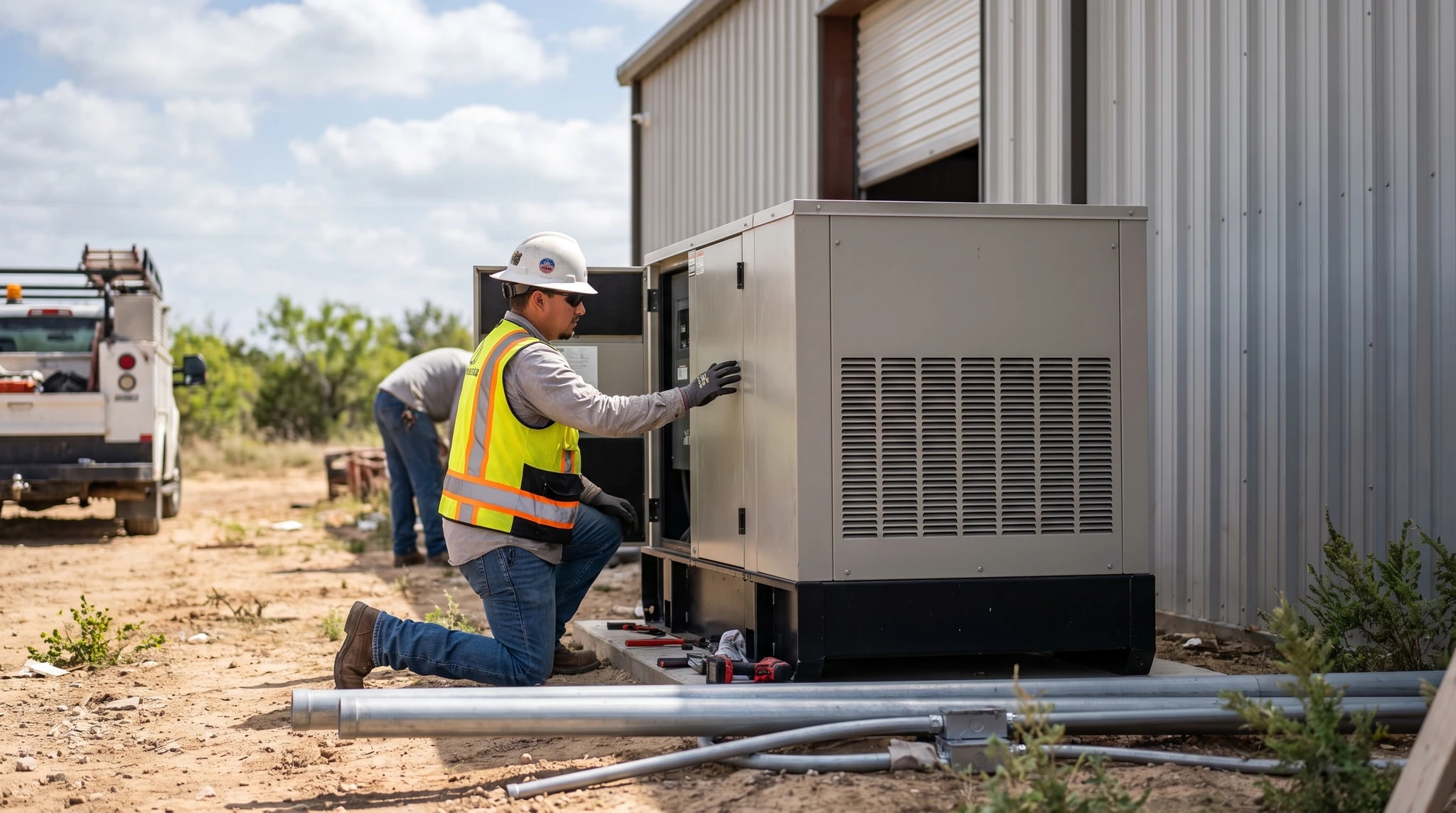
Professional installation of your standby generator is crucial for ensuring safety and compliance with local codes. A licensed commercial electrician will handle the installation process, which includes several key steps.
- Site assessment: Evaluating your property to determine the optimal generator placement.
- Electrical connections: Ensuring proper wiring and connections to the ATS and your electrical panel.
- Testing: Conducting thorough testing to confirm the generator operates correctly and safely.
By partnering with a qualified electrician, you can ensure that your generator installation meets all safety standards and operates efficiently. This investment in professional services can save you from costly mistakes and potential hazards.
Maintenance for Long-Term Reliability
Regular maintenance is essential to keep your standby generator in optimal condition. A commercial electrician can provide ongoing maintenance services to ensure your generator is always ready when you need it.
- Routine inspections: Regular checks to identify potential issues before they become serious problems.
- Oil and filter changes: Keeping the engine lubricated and clean for efficient operation.
- Load testing: Ensuring the generator can handle the necessary loads during a power outage.
Establishing a maintenance schedule with your electrician can help you avoid unexpected failures and extend the lifespan of your generator. This proactive approach is crucial for minimizing disruptions and maintaining operational continuity.
Understanding Local Regulations and Compliance
When installing a standby generator, it’s essential to be aware of local regulations and compliance requirements. These can vary by municipality and can affect installation and operation.
- Permitting: Many areas require permits for generator installation, ensuring compliance with safety standards.
- Building codes: Adhering to local building codes is crucial for safety and legality.
- Environmental regulations: Understanding emissions regulations related to fuel types and generator operation.
Working with a licensed electrician familiar with local regulations can help you navigate these requirements and ensure your generator installation is compliant. This knowledge can prevent costly fines and ensure your business operates within legal parameters.
Conclusion
Choosing the right standby generator for your Texas business involves careful consideration of sizing, fuel options, transfer switches, and installation and maintenance. By understanding these key factors and working with a licensed commercial electrician, you can ensure your business remains operational during power outages.
Contact us today to learn more about our generator installation and maintenance services. Our team of licensed and insured electricians is ready to help you protect your business with reliable power solutions.
Frequently Asked Questions
What size generator do I need for my business?
The size of the generator you need depends on the total wattage of the critical loads you want to power. Calculate the starting and running wattage of your essential equipment to determine the appropriate generator size.
How does an automatic transfer switch work?
An automatic transfer switch detects power outages and automatically switches your electrical supply from the utility to the generator, ensuring a seamless transition and minimal disruption to your operations.
What are the fuel options for standby generators?
Common fuel options for standby generators include diesel, natural gas, and propane. Each has its pros and cons, so consider your operational needs and local availability when choosing.
Why is professional installation important?
Professional installation ensures that your generator is set up safely and complies with local codes. A licensed electrician will handle the necessary electrical connections and testing to ensure proper operation.
How often should I maintain my standby generator?
Regular maintenance is crucial for reliability. Establish a maintenance schedule with a commercial electrician to conduct routine inspections, oil changes, and load testing to keep your generator in optimal condition. To plan your backup power, reach out to our team.
FAQs
How big a generator does my business need?
It depends on which loads must stay on during an outage. An electrician totals those critical circuits and adds a margin for motor start-up.
What does an automatic transfer switch do?
It senses a utility outage and moves your building to generator power without anyone flipping a switch. When power returns, it switches back.
How often should a standby generator be serviced?
Most manufacturers call for regular exercise runs and at least annual maintenance. Follow the schedule in your unit’s manual.