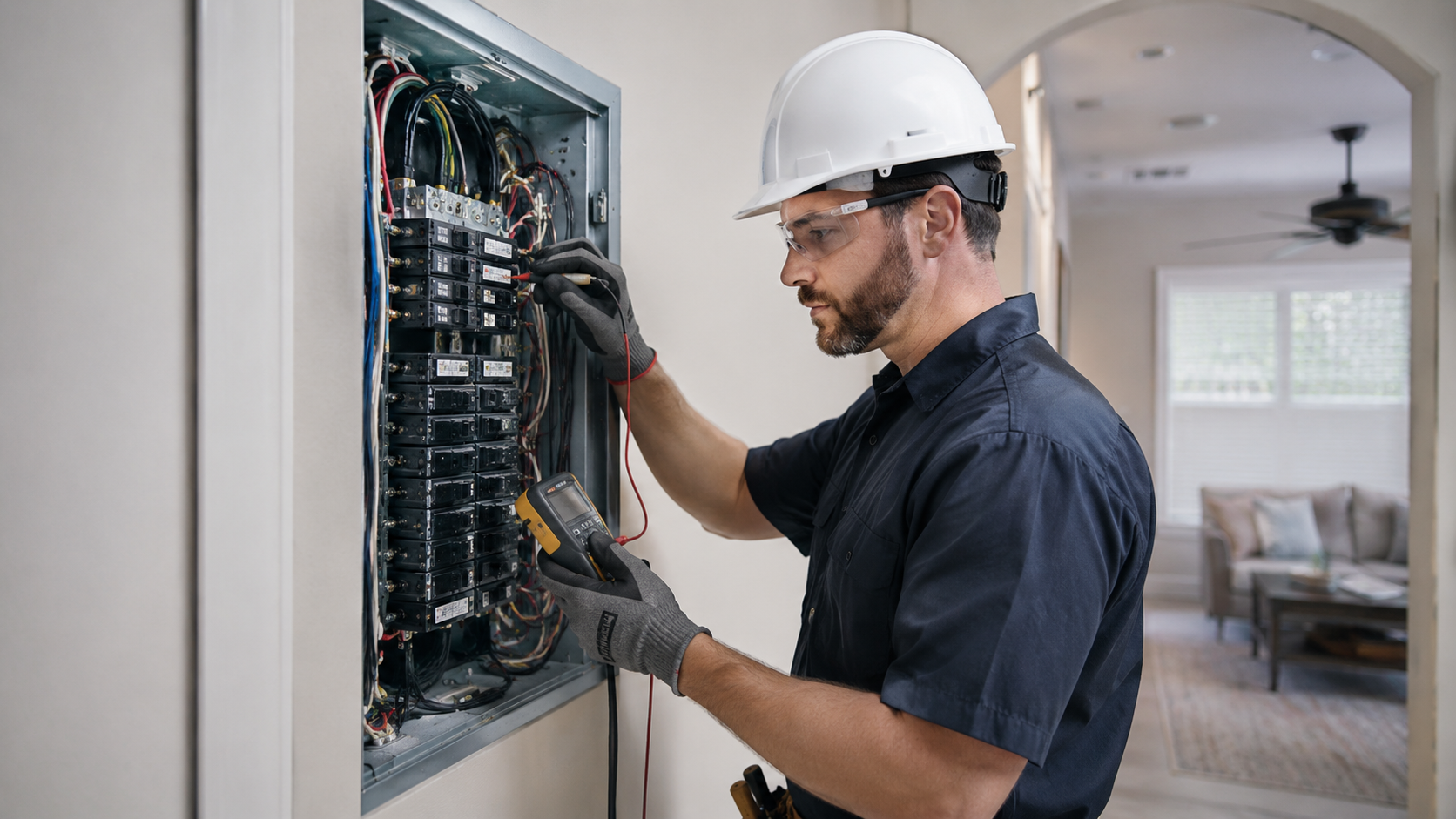
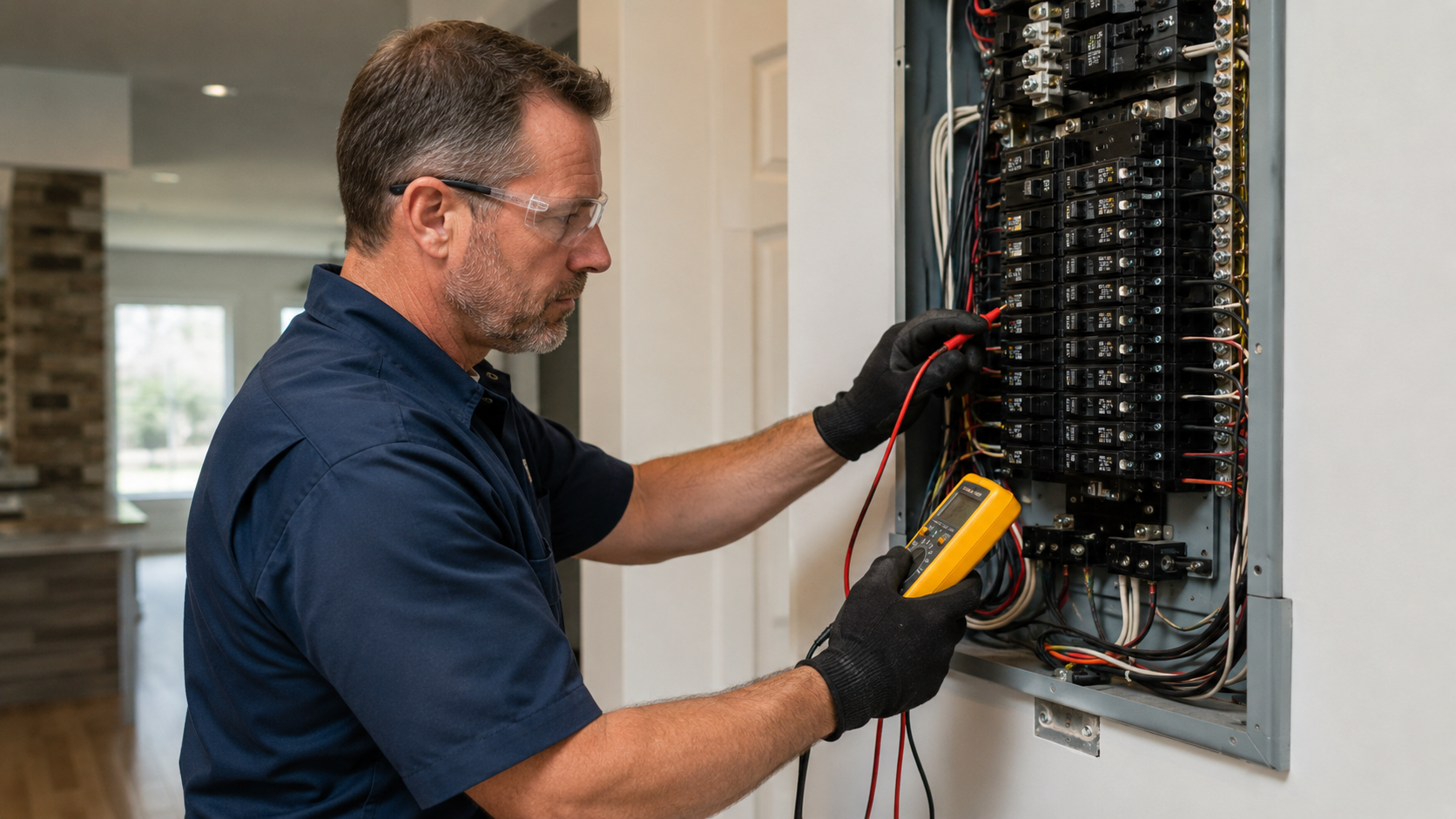
You might own a house in Fort Worth, Arlington, or anywhere in the Dallas-Fort Worth area, and never think twice about your electrical system. It’s not until something happens—a bulb starts flickering, a circuit breaker keeps blowing, or an outlet feels too hot—that you realize you need to call a professional. That’s when a home electrical safety inspection will help you prevent these kinds of problems. As a residential electrician with more than 25 years of experience in the DFW metro area, I’ve helped homeowners throughout Fort Worth, Southlake, Arlington, and other communities by inspecting their homes’ electrical systems. KSI Electric has been providing residential electrical services to the DFW area since 1995.
What Is A Home Electrical Safety Inspection?
When a licensed electrician performs a home electrical safety inspection, they examine every part of your home’s electrical system, looking for any hazards and verifying that your system meets all applicable codes. This is a thorough evaluation that goes beyond a simple visual inspection of the visible parts of your electrical system. An electrician will open up your electrical panel and check all of the breakers, outlets, wiring, switches, etc., for proper connections, corrosion, heat damage, and other potential problems. They’ll also test outlets and appliances to verify that they’re working correctly and safely. Finally, they’ll check to make sure your system has the right GFCIs and AFCIs and that it doesn’t have any outdated components, like aluminum wiring. When the inspection is complete, the electrician will provide you with a detailed report that indicates which parts of your system are safe and which need repairs or upgrades.
When To Get A Home Electrical Safety Inspection In DFW
Some homes need an electrical safety inspection every year, while others only need it every few years. It depends on a variety of factors, including how old the home is and how many changes have been made to the electrical system over time. Here are some of the most common reasons homeowners schedule an electrical inspection.
Your Home Is Older Than 25 Years
Many homes in the DFW metro area are older than 25 years, which means their electrical systems may be outdated or no longer meet current code requirements. If your home is more than 25 years old, and you don’t know when it was last inspected, you should definitely schedule a home electrical safety inspection. Homes that are more than 40 years old, especially those with original wiring, are even more likely to have outdated components or unsafe conditions.
You’re Buying Or Selling A Home
When you buy or sell a home, it’s important to have a licensed electrician take a look at the electrical system. A standard home inspection won’t cover the electrical system as thoroughly as a home electrical safety inspection. An electrician will look for problems like outdated panels, improper wiring, ungrounded outlets, etc. If you’re selling a home, a pre-listing inspection can give buyers confidence and help you avoid issues during negotiations.
You’re Doing A Home Renovation Or Upgrading Appliances
Renovations or adding appliances to your home can increase the amount of electricity your system needs to handle. An inspection can tell you if your electrical panel has enough capacity to handle the added load or if it needs to be upgraded. Additionally, an inspection can help you ensure that any new electrical work is done according to code and is properly permitted and inspected.
You Notice Something Wrong
If you notice any of the following symptoms, it’s time to call an electrician for a home electrical safety inspection:
- Circuit breakers keep tripping
- Lights that dim or flicker when another device is turned on
- Loose or damaged outlets
- Buzzing or humming coming from the panel or outlet
- Shock or tingling from appliances or switches
All of these symptoms can be indicative of an underlying electrical issue.
What Is an Electrical Safety Inspection?
An electrical safety inspection will cover all accessible parts of the electrical system in your home.
Electrical Panel and Breakers
The electrician will verify the panel is correctly rated, the breakers are correctly sized, and that there are tight connections. They will also look for any signs of overheating, corrosion, or damaged bus bars. Additionally, they will look for panels such as Federal Pacific or Zinsco, which have been associated with safety issues.
Wiring and Connections
They will check that the wires are correctly sized, that connections are secure, that there is no sign of wear, and that the wiring isn’t outmoded. Older homes in the DFW area may have aluminum branch circuit wiring, which poses a risk of fire at connection points, or knob-and-tube wiring, which is ungrounded and insufficient for current power requirements.
Outlets and Switches
Outlets and switches that can be reached will be tested for proper wiring, secure mounting, and correct function. Ground-fault protection will be verified in areas like the kitchen, bathroom, garage, and outside the house. Arc-fault protection will be checked if applicable.
Grounding and Bonding
Grounding provides a path for excess electricity to go to ground in the event of a surge or fault. The inspector will check for grounding and bonding, including checking for grounding electrodes, water pipe bonds, and bonding to other metal piping systems.
Smoke Detectors and Carbon Monoxide Alarms
Electrical inspectors often include verification of smoke detectors and carbon monoxide alarms. The inspector will check to make sure they are present, operational, and in the right location. Some older homes that only have battery-operated smoke detectors may be advised to upgrade their equipment.
How Much Do Electrical Safety Inspections Cost in Fort Worth?
DFW area homeowners typically pay between $150 and $400 for a whole-home electrical safety inspection. This price varies based on the size of your home, how old the system is, and how many devices are tested. Smaller homes tend to cost less; larger homes with several electrical panels may cost more.
This price refers to a true safety inspection, which involves opening the panel, testing circuits, and preparing a written report. A basic visual inspection may cost less. If you need to address any issues identified by your electrician, you should receive a detailed breakdown of what work is needed and how much it will cost.
How Often Should I Get My Home’s Electrical System Checked?
If your home is relatively new and doesn’t have any known problems, getting it checked every 3 to 5 years is a good rule of thumb. Older homes, particularly those built before 1980, should be inspected every 2 to 3 years. Homes over 40 years old that have never been comprehensively inspected should be evaluated as soon as possible. Additionally, you should schedule an inspection following severe weather like lightning strikes, flooding, or significant power surges. After purchasing a home, an inspection dedicated to your electrical system can set a solid baseline for the health of your system.
Finding the Best Electrician for an Inspection in DFW
In Texas, all electrical work must be conducted by a licensed electrician who is registered with the Texas Department of Licensing and Regulation. A regular home inspector is not trained and permitted to inspect an electrical system like a professional electrician.
Look for a company that is licensed and insured, and has a strong reputation in your area that will provide a written report. Inquire if they open up the panel, test outlets, and verify safety devices instead of just doing a visual inspection.
For over 30 years, KSI Electric has been inspecting and servicing homes throughout Fort Worth, Arlington, Southlake, and other DFW suburbs. KSI Electric’s inspections are comprehensive, our reports are easy to read, and we discuss any issues and potential solutions in plain English without pushing unnecessary services.
Safeguarding Your Home Begins With Understanding What’s Behind Your Walls
Your electrical system runs quietly behind your walls on a daily basis. However, a loose connection or out-of-date panel can lead to fires or other forms of property damage. A residential electrical safety inspection allows you to understand what is going on behind the scenes so you can make educated decisions regarding fixes, upgrades, or maintenance.
If you are located in Fort Worth, Arlington, Southlake, Grand Prairie, or another part of DFW and don’t know when your home was last inspected, contact KSI Electric at (817) 932-5882 or online at ksiresidentialelectric.com. We respond within one business hour and offer free quotes with no pressure.
FAQs
How much does a home electrical safety inspection cost in Fort Worth?
The average cost for a complete electrical inspection in DFW is $150 to $400, based on the size, age, number of panels, and number of devices being tested. An actual inspection opens up the panel, tests outlets and safety devices, and includes a written report.
How frequently should a home be inspected?
It is recommended that most homes receive a residential electrical safety inspection every three to five years. If your home was built prior to 1980, inspections every two to three years might be recommended. You should also get an inspection when purchasing a home, planning major remodels, installing additional high-draw devices, or experiencing warning signs like flickering lights or breaker trips.
What is included in a home electrical safety inspection?
An electrical safety inspection covers your main panel, breakers, outlets, safety devices, visible wiring, grounding and bonding, and smoke detectors. Your electrician will check for damage, incorrect connections, or obsolete materials and provide a written report with any suggested next steps.